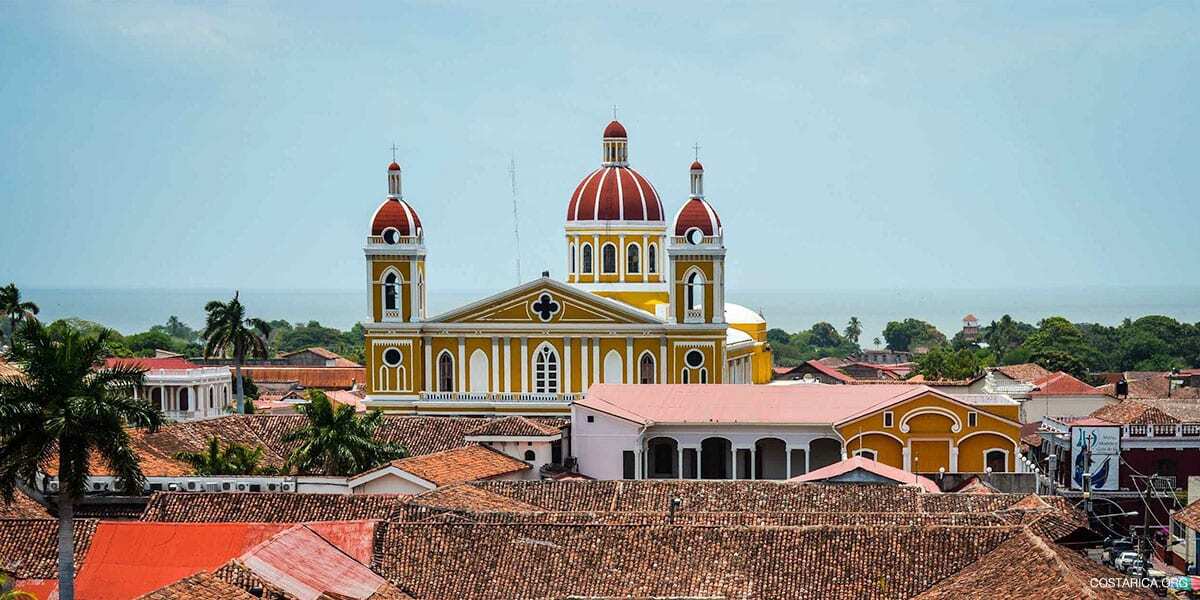
Granada, the Isletas and Laguna de Apoyo
A colonial city on Lake Nicaragua, founded in 1524, with 365 volcanic islands, a crater lake and an active volcano within reach of one base.
At a glance
- Fly into: Managua (MGA). Granada is reached by road from Managua airport, and we arrange the transfer.
- Best weather: December to March. These are the most comfortable months in Granada, and February and March have the fewest rainy days.
- Pairs with: San Juan del Sur. On the Pacific coast, about 1 hour 27 minutes by car from Granada.
Why Granada works as your first base in Nicaragua
Granada sits on the northwestern shore of Lake Nicaragua. Francisco Hernández de Córdoba founded it in 1524, which makes it one of the oldest colonial settlements in Central America. The lake drains to the Caribbean through the San Juan River, so Granada was once an Atlantic port, and pirates attacked it on three occasions. In 1856 William Walker ordered the city burned, and much of the arcaded centre you walk through today was rebuilt in the decades after. Around the city the scenery changes quickly. The Isletas are 365 small volcanic islands just southeast of Granada, and you visit them by boat or kayak. Laguna de Apoyo is the largest crater lake in Nicaragua and has clean water for swimming. Masaya Volcano National Park keeps a glowing lava lake in its Santiago crater. The town of Masaya has the old craft market, and Masatepe, in the hills, is known for furniture. Because tours to the lake, the crater and the volcano all start from the city, you can unpack once and spend each day somewhere different.
History
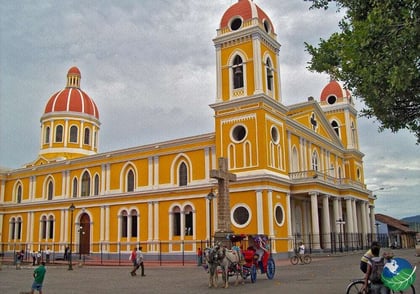
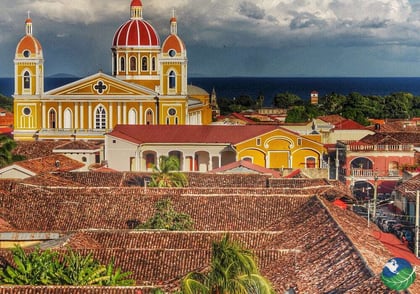
Founded in 1524 and burned in 1856, Granada has a rebuilt centre around Plaza de la Independencia, a neoclassical cathedral and churches such as La Merced.
Water
The Isletas are 365 volcanic islands on Lake Nicaragua, and Laguna de Apoyo is the largest crater lake in the country.
Volcanoes
Masaya Volcano has a lava lake in the Santiago crater, and Mombacho rises above Granada with a cloud forest on its upper slopes.
Places to know
Granada colonial centre
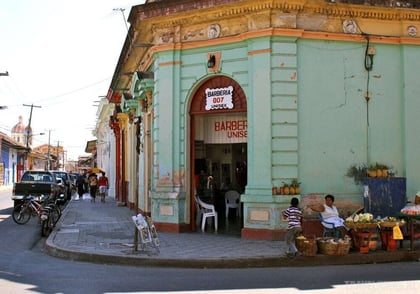
Plaza de la Independencia is the start of Calle Real and Calle La Calzada, which run down to the lake and its restored waterfront promenade. The Merced Church gives a 360 degree view of the city, and horse-drawn carriages pass the cobbled streets.
Las Isletas
A group of 365 small volcanic islands where boat and kayak tours pass mangrove channels and wildlife, with views of Mombacho. Many islands have houses, a few have hotels, and Jicaro Island Lodge is on a private island reached only by boat.
Laguna de Apoyo and Catarina
A freshwater lake in a volcanic caldera, for swimming, kayaking, hiking and diving. Catarina, a town on the crater rim, has a panoramic viewpoint, and Pacaya Lodge & Spa stands on the rim.
Masaya
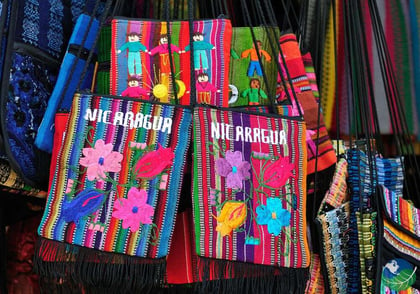
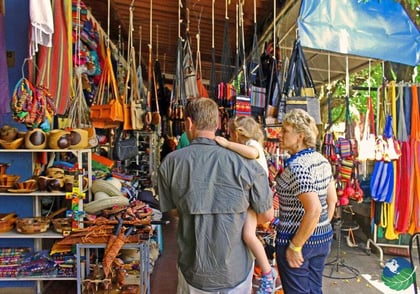
Known as the Ciudad de las Flores, with an old market begun in 1880 and finished in 1891 that sells crafts in wood, clay and manila fibre. The Jueves de Verbena folklore programme, started in 1999, takes place on Thursdays.
Masatepe
A hill town known for furniture and cane-woven rocking chairs, a little cooler than the lowlands. Hacienda Puerta del Cielo Ecolodge & Spa is here, near Masaya Volcano National Park.
When to go to Granada
December to March gives the most comfortable weather in Granada, with February and March having the fewest rainy days. March to May is the warmest stretch. The wet season runs from May to October, with the heaviest rain in September and October and a short dry spell in July known as the canícula.
Getting to Granada and around the region
From Managua airport (MGA)
Short road transfer. A private road transfer to Granada, which we book for your arrival. Timing depends on traffic.
From Granada to Masaya
About 30 minutes. By road, for the market, the volcano or both in one outing.
From Granada to Jicaro Island Lodge
Short boat ride. By boat from Granada's lake shore, arranged by the lodge. The island has no road access.
From Granada to San Juan del Sur
About 1 hour 27 minutes. By car, roughly 100 km by road.
From Granada to Ometepe
About 4 hours 23 minutes. By shuttle and boat, including transfers.
Frequently asked questions
How long should we stay in Granada?
Plan several nights. The colonial centre deserves unhurried time on foot, and the Isletas, Laguna de Apoyo, Masaya Volcano and Mombacho are each separate outings from the city. We set the length around the rest of your route.
When is the best time to visit Granada?
January, February, March and December have the most comfortable weather, and February and March have the fewest rainy days. The wet season runs from May to October, and September and October are the wettest months.
How do we get to Granada from the airport?
You fly into Managua (MGA) and continue by road. We arrange a private transfer for your arrival, and the time on the road depends on traffic.
Can we see lava at Masaya Volcano?
The Santiago crater holds a persistent glowing lava lake, and the national park lies between Managua and Granada. Night tours usually start in the late afternoon, reach the summit by vehicle at nightfall and include a stop at the volcano museum. Volcanic activity can change, so we cannot promise what you will see.
Can we stay on the Isletas?
Yes. Jicaro Island Lodge is on a private island in the Isletas and is reached only by boat, which the lodge arranges from Granada. Some other islands also have houses, shops and hotels.
Is Nicaragua safe to visit right now?
We can only point you to the official advisory. The US State Department rates Nicaragua Level 3, Reconsider Travel, in an advisory dated May 14, 2026, and it mentions violent crime and a risk of wrongful detention. Read the full text at travel.state.gov/en/international-travel/travel-advisories/nicaragua.html and check your own government's advice before you book.
Gallery
Location
Granada, Nicaragua
Granada, Nicaragua: a colonial city founded in 1524, the 365 Isletas, Laguna de Apoyo and Masaya Volcano. When to go and how to plan it.